Location, Location, Location: why where you are decides where you rank
Where a business is physically located is one of the strongest signals in local search, and the one an SEO cannot change after the fact. Google weighs the distance between the searcher and your address alongside relevance and prominence, so your location decides which map results you are even eligible for. A verified Google Business Profile and consistent citations then confirm that location everywhere Google and AI engines look.
By Terraform Digital · Published · Updated · 5 min read
Why “location, location, location” applies to search
Real estate agents have said it for generations: location, location, location. You can improve the building. You cannot move the lot. The same rule governs how a business shows up online, and almost nobody tells a new owner that before they sign a lease.
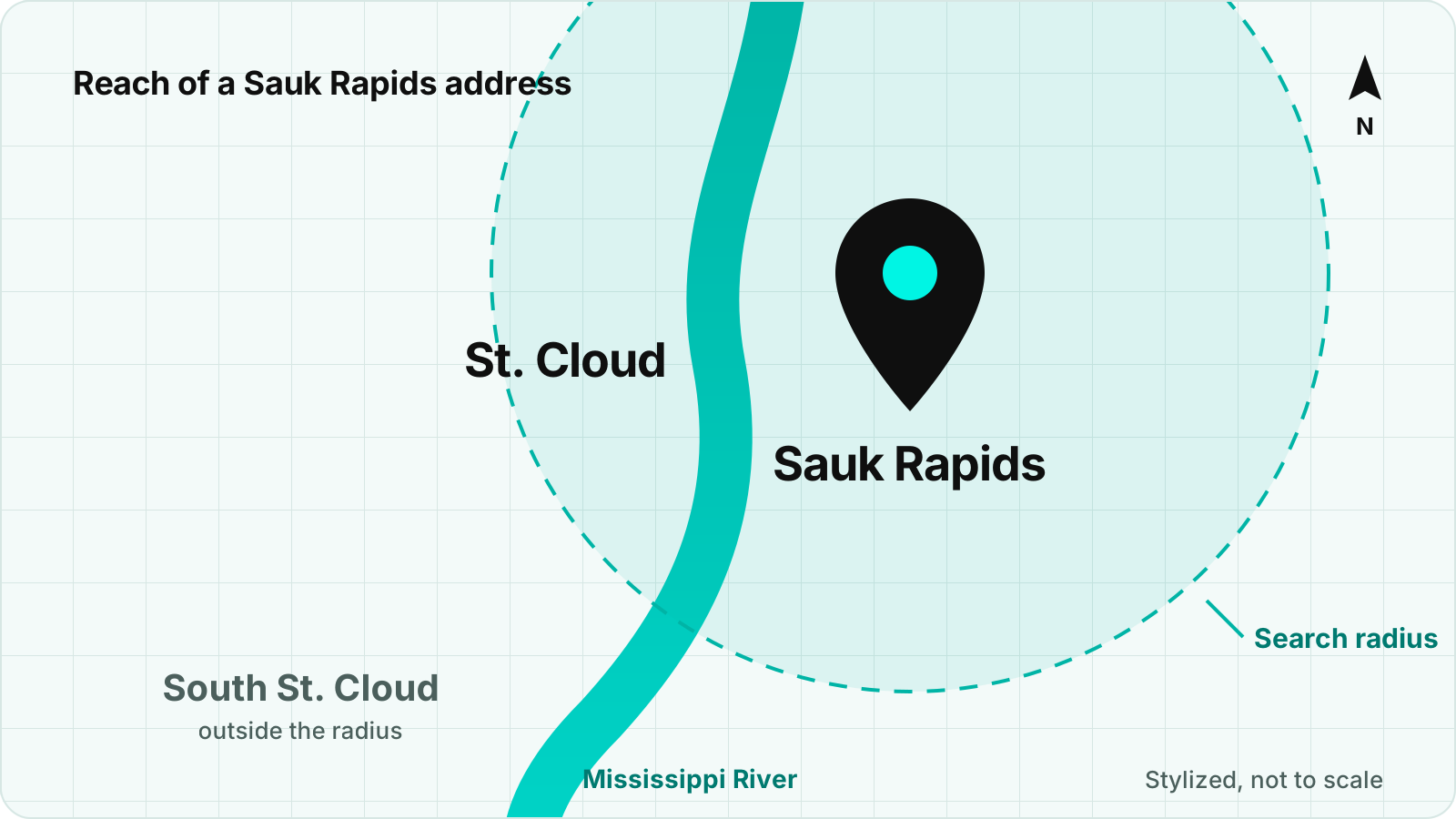
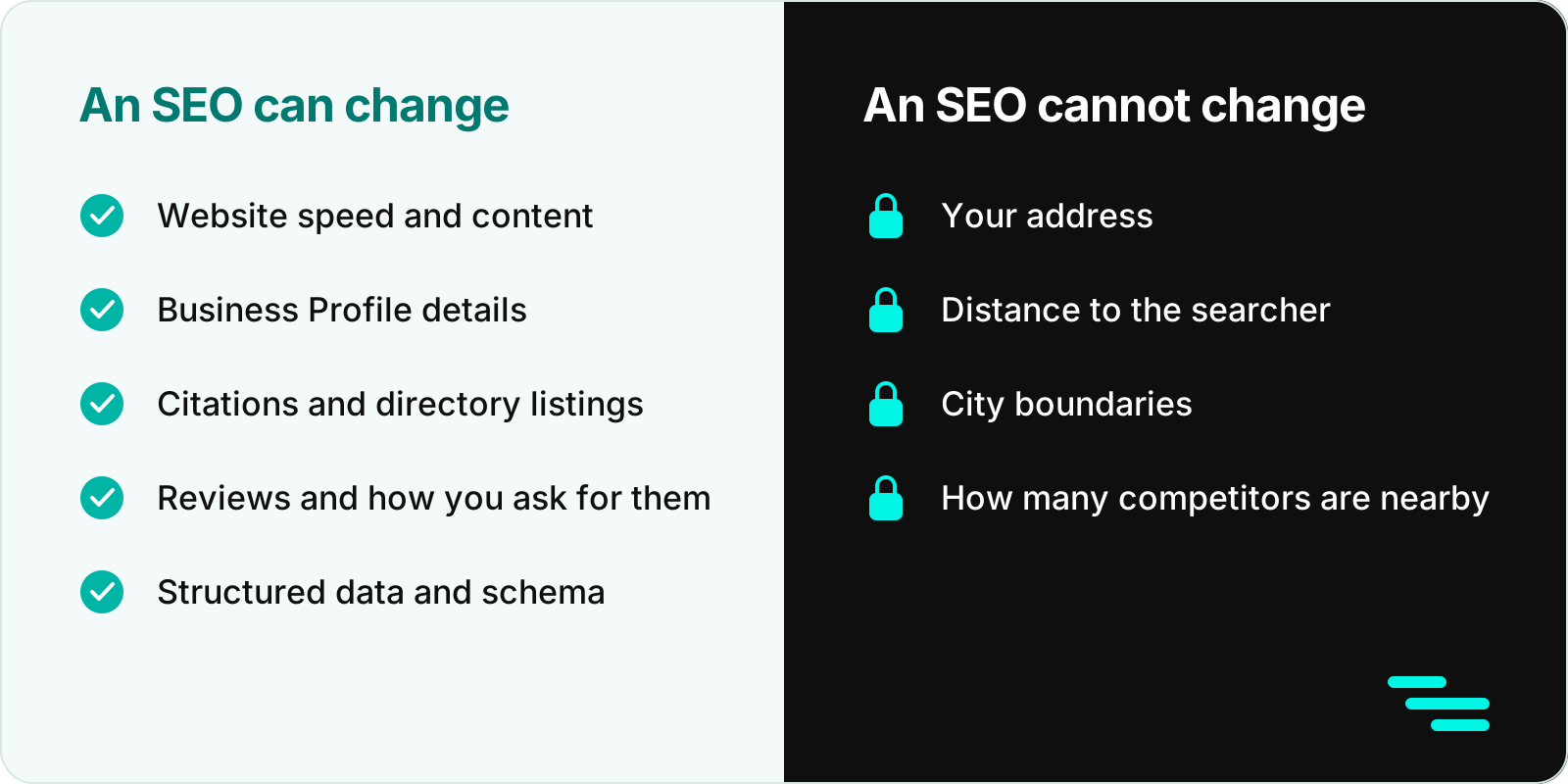
Ask an SEO what they can improve and the list is long: site speed, content, titles, structured data, reviews, your Google Business Profile. Ask what they cannot touch and the list is short, but the first item on it outweighs most of the others. Where your business physically sits decides which searches you are eligible to win before any optimization begins.
The ranking factor no SEO can change
Google explains its local results in one sentence: they are based primarily on relevance, distance and prominence. Relevance is how well your profile and site match the search. Prominence is how well known and well reviewed you are. Distance is how far your address is from the person searching, or from the place they named.
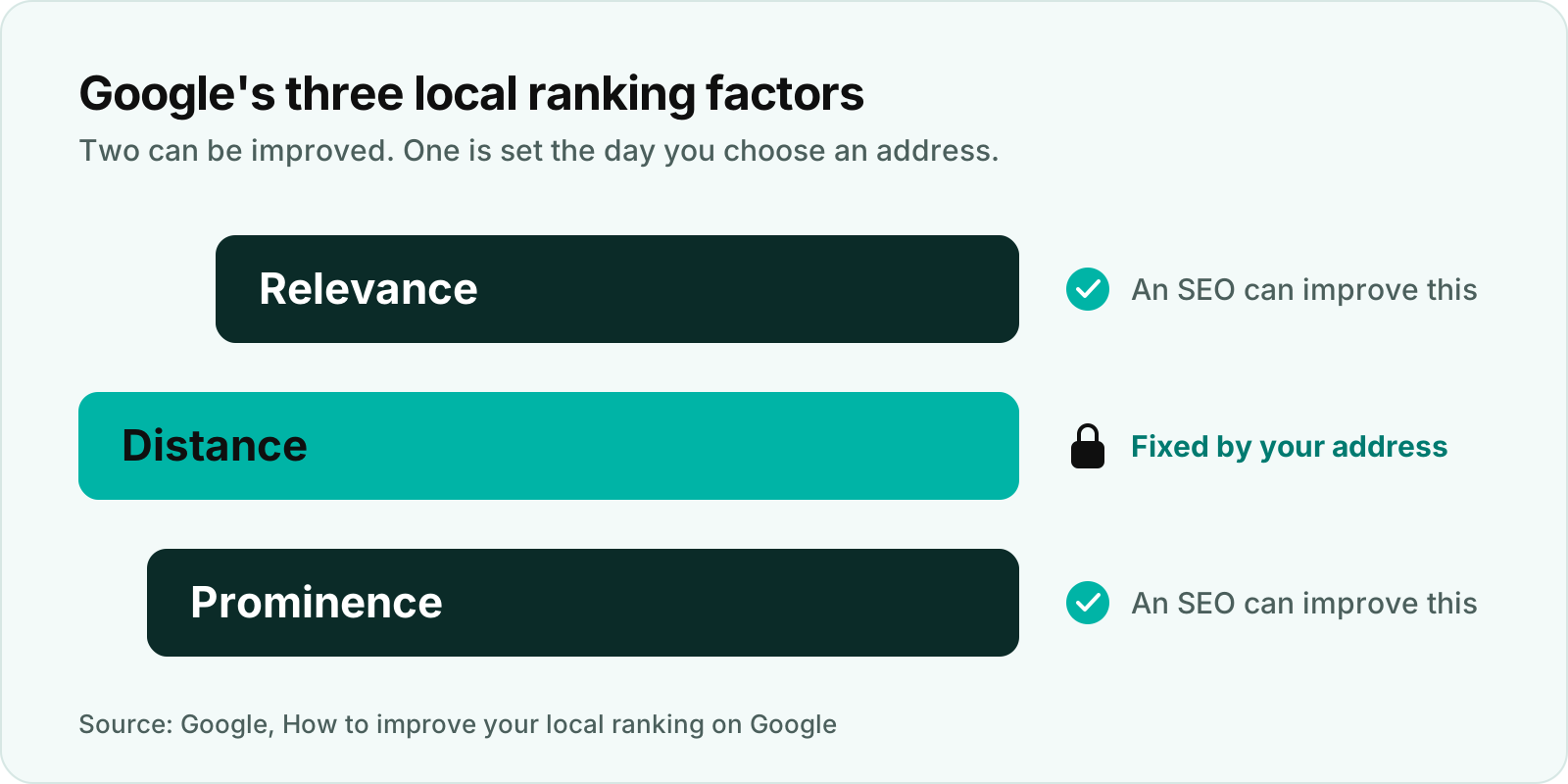
An SEO can work on two of those three. Distance is fixed the day you pick an address and weighed on every local search. When someone in St. Cloud searches “electrician near me,” Google draws the map results from businesses close to that person. A better website in the next county does not change the math.
That is why two businesses with similar sites and reviews can have completely different visibility: one is inside the area people search from, the other a few miles outside it, and the map treats those miles as a hard edge.
Your Google Business Profile is where your location lives
The map pack, the three map listings that appear for most local searches, is built from Google Business Profiles, not websites. Your profile is the record Google uses to decide where your business is, what it does and whether it is open. It is the most important asset for local visibility, and the address is its foundation:
- The address has to be real. Google’s guidelines require a location you own or lease and staff during your stated hours. P.O. boxes, mailbox stores and unstaffed virtual offices are not eligible, and profiles built on them are routinely suspended.
- Service-area businesses still have a center. If you go to your customers, you can hide the address and list the cities you serve. Visibility is still measured from where you are based.
- City boundaries matter. A business just outside a town’s limits is not in that town the way the map pack counts it.
- The rest of the profile earns the slot. Category, services, hours, real photos and steady reviews do not change the distance, but they decide who wins among businesses that qualify on it.
Online citations: proving your location everywhere else
A citation is a mention of your business name, address and phone number on another site. Apple Maps, Bing Places, Yelp, the Better Business Bureau, your chamber of commerce and industry directories are all citations. Search engines and AI assistants cross-check your location against them.
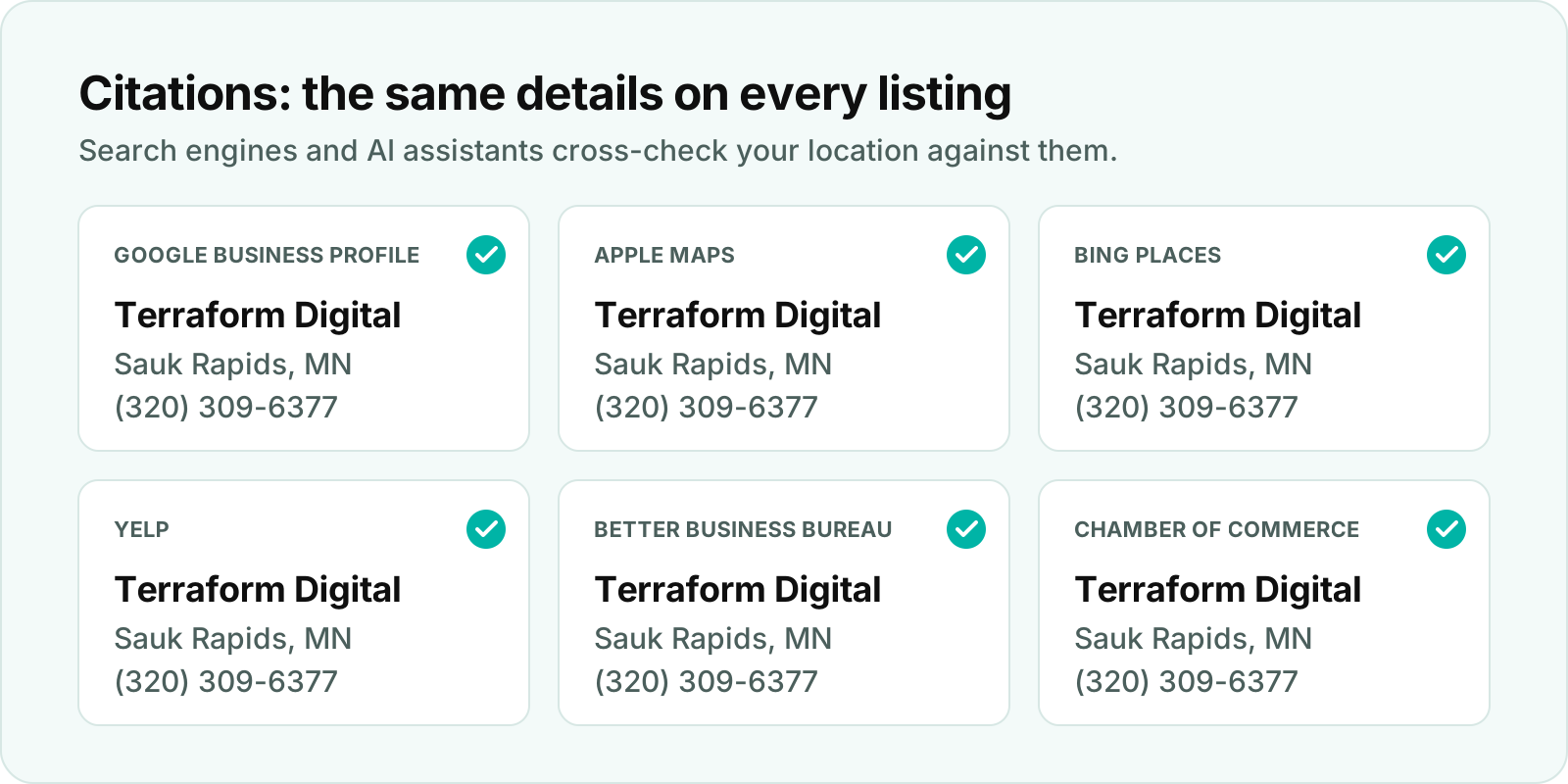
When every listing says the same thing, Google’s confidence in your address goes up. When one has the old suite number, another a different phone and a third the previous owner’s name, every version becomes less trustworthy, including your own site.
Citations are also how generative AI tools decide you exist in a place. Ask ChatGPT, Gemini or Perplexity for a recommendation in a town and they read largely these listings, your profile and your reviews. We cover the mechanics in our guide to GEO, AEO and SEO; the short version is that a consistent location is the entry ticket.
For a new business the routine is simple: claim the core listings in your first month, enter the exact same name, address and phone everywhere, and update all of them the day you move.
Choosing a location as a new business owner
If you have not signed a lease yet, you have a lever most owners never get to pull. Treat the address as a marketing decision, not just rent.
- Decide which city you need to win. Not where you live, but where your customers search from.
- Locate inside that city’s boundary. A modest space on the right side of a municipal line is worth more in the map pack than a nicer space on the wrong side.
- Check the density of competitors. A crowded category pushes the fight to reviews and relevance. A sparse one can be a gift.
- Think five years out. Moving a profile unsettles the trust you built, and every citation has to be corrected by hand.
We live this ourselves. Terraform Digital is in Sauk Rapids, across the Mississippi River from St. Cloud, the regional hub for Central Minnesota. North and east of the river, a Sauk Rapids address competes well. For a searcher on the far south side of St. Cloud, a business located there usually wins on distance alone. We compensate as we advise clients to: a service area that names the cities we work in, pages that say what we do in each, consistent listings, and paid search where the map will not reach.
What to do if your location is already set
Most owners read this after the lease is signed. The address is fixed, so make everything that is not fixed as strong as it can be:
- Complete your Google Business Profile with the exact address, the right primary category and a service area that lists the cities you travel to.
- Audit your citations and correct every mismatch. Our AI search readiness checklist walks through the checks.
- Build a page for each city you serve, so you can win organic results where the map pack is out of reach.
- Use paid search to buy the visibility that distance denies you.
- Ask every happy customer for a review, because prominence separates businesses that tie on distance.
Location sets the field you play on. Everything else decides whether you win on it, and that everything is what AI-ready search optimization covers. To see how your business shows up in Google and AI search from where it sits today, request the free AI Readiness Audit and we will reply within a day.
Questions people ask
Can I use a P.O. box or virtual office for my Google Business Profile?
No. Google's guidelines require a real location that you own or lease and staff during your stated hours. P.O. boxes, mailbox stores and unstaffed virtual offices are not eligible, and profiles built on them are routinely suspended. If you work at your customers' locations, set the profile up as a service-area business: the address is hidden, but it is still the point your visibility is measured from.
My business is in Sauk Rapids. Can I rank for St. Cloud searches?
Often, yes, but not everywhere. For searchers near the river, a Sauk Rapids address competes well in the St. Cloud map pack. On the far south and west sides of St. Cloud, businesses located there usually win on distance. Organic results are more forgiving than the map: a strong St. Cloud service page, a service area that names the city and consistent citations all help.
What is a citation in local SEO?
A citation is any mention of your business name, address and phone number on another website: Google and Apple Maps, Bing Places, Yelp, the Better Business Bureau, your chamber of commerce and industry directories. Consistent citations confirm your location to search engines and AI assistants. Inconsistent ones make every version, including your own site, less trustworthy.
Do I need a separate location to rank in each city I serve?
Only if it is a real, staffed office. Renting a desk you never use to get a map listing violates Google's guidelines and risks suspension of every profile you own. The honest route is a service area that lists the cities you travel to, a page for each important city that says what you do there, and paid search to fill the gaps the map will not give you.
Does location matter for ChatGPT and other AI search tools?
Yes. When someone asks an AI assistant for a plumber near them, it draws on the same map data, business profiles, reviews and directory listings that Google uses. A clearly stated, consistent location is how those systems know you are a real option in that place.
How we can help
Be found, cited and recommended in Google, AI Overviews, ChatGPT and Perplexity. SEO, GEO and AEO from a Sauk Rapids, Minnesota agency. Free audit.
Learn more about AI Search Optimization: SEO, GEO & AEOGoogle Ads, Local Services Ads and Meta campaigns run on real conversion data. Tracking fixed first, budgets tied to leads, honest monthly reporting.
Learn more about PPC & Paid AdvertisingFast, search-ready websites built to convert: modern code, structured data, working forms and measurement from day one. Design and development in Minnesota.
Learn more about Website Design & Development